




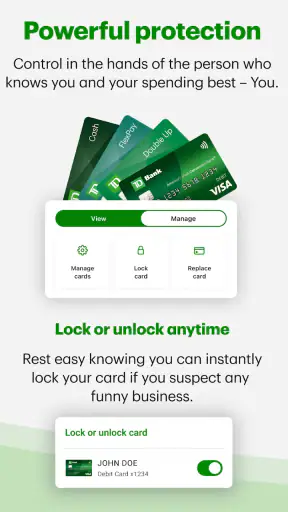
Managing a bank account from a phone sounds simple until an app makes an everyday task feel like a small administrative project. After spending time with TD Bank (US), my overall impression is that it is built around reducing that friction for customers who already use TD Bank for their regular finances. It is a practical mobile banking app, not a budgeting coach or an investing workstation, and that focus is its biggest strength. I can check an account, review activity, move money, and handle routine banking without needing to visit a branch or open a desktop browser.
The app is free, aimed at Everyone, and comes from TD Bank, N.A. Its position in the Finance category is easy to understand: this is the bank’s everyday digital front door. It has been available since Aug 14, 2010, and the current version is 26.10.1.71 for devices running iOS 12 or later. That long presence matters because banking apps need to feel dependable more than flashy. In my experience, TD Bank (US) is most convincing when I treat it as a tool for frequent, small decisions rather than as a complete personal-finance system.
What using TD Bank (US) feels like in real life
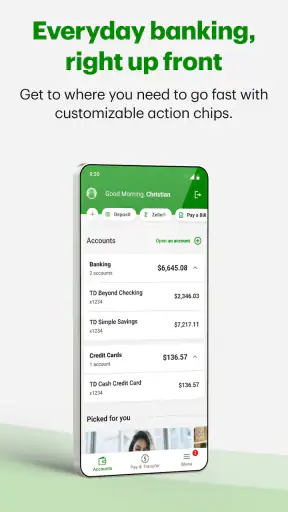
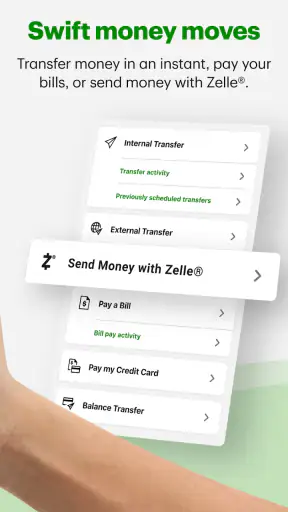
The most useful quality is the way the app brings several ordinary banking jobs into one place. I can imagine opening it before paying a bill, checking whether a deposit has arrived, confirming a card purchase, or moving money between accounts. These are not dramatic moments, but they are exactly where a mobile banking app earns its place on my phone. A good banking experience should let me answer “What is my balance?” and “What just happened?” quickly, without making me reconstruct the answer from several screens.
TD Bank (US) has a familiar bank-app role rather than trying to become a general financial dashboard. That makes it easier to recommend to someone who wants direct access to TD Bank services and does not want to combine a separate budgeting app with a separate account-management app just to understand daily cash flow. The trade-off is that users looking for detailed spending analysis, investment research, or broad account aggregation may find the experience narrower than a dedicated finance platform.
One realistic scenario shows where it fits well. Suppose I am leaving work and need to confirm that a recent payment has cleared before making another purchase. I open the app, review the relevant account activity, and use that information to decide whether the purchase is sensible. Later, I might use the same app to check a card transaction or transfer money between eligible accounts. The value is not one spectacular feature; it is the ability to complete these connected tasks without changing tools.
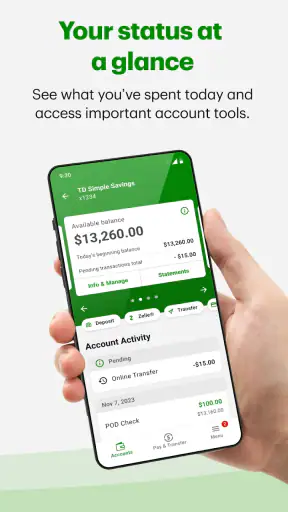
I also appreciate the difference between a displayed balance and the story behind that balance. A current-looking number can be misleading if I forget about recent purchases, pending activity, or a transfer that has not fully settled. The useful habit is to open the transaction history instead of relying on the headline balance alone. That small workflow is more important than it sounds, especially for anyone using the app to avoid accidental overspending.
Where the app earns trust
A banking app has to make routine information easy to inspect. TD Bank (US) is strongest when I use it as a confirmation tool: I can check whether an expected transaction appears, look for something unfamiliar, and keep an eye on account movement between visits to a branch. That regular checking can help catch mistakes earlier than a monthly statement review. It also gives me a simple way to verify that my own memory matches the account record.
The app’s established presence and broad adoption support that practical role. It has an average rating of 4.2 from around 90 thousand ratings, with roughly 34 thousand written reviews, and it has passed 5 million installs. Those figures do not guarantee that every user will have a smooth session, but they do suggest that the app is used by a substantial customer base rather than being an experimental side project. I read that as a reason to expect an experience shaped by common banking needs.
The developer is clearly identified as TD Bank, N.A., which is relevant for a financial app. I am not being asked to use an unrelated third-party wallet to reach my bank account; the app is tied directly to the institution it represents. That direct relationship is one of its most meaningful advantages over generic money-management apps, which may offer a wider overview but can introduce another layer between me and the bank.
Another strength is the app’s usefulness for short sessions. I do not want to spend ten minutes navigating through an elaborate financial dashboard simply to verify a purchase. A focused banking app makes more sense for people who check their finances in brief moments: while waiting for a train, before paying a large bill, or after receiving a notification about account activity. The less time I spend searching for basic information, the more likely I am to check regularly.
Small workflows that make a difference
My first practical tip is to use transaction review as a routine, not only as an emergency check. Looking at recent activity after a busy day can reveal duplicated purchases, an unfamiliar merchant name, or a payment that posted differently from what I expected. Merchant names are not always as recognizable as the shop where I made the purchase, so checking the date and amount together is more reliable than judging the description alone.
My second tip is to separate “available now” thinking from “planned for later” thinking. The app can help me see what has already affected the account, but I still need a personal system for upcoming bills and commitments. I would not treat the displayed balance as a full budget. Instead, I would compare it with scheduled expenses before making a decision. This is a key limitation for users who expect the app itself to tell them how much discretionary money they have.
A third useful workflow is to check the app before contacting support or visiting a branch. If I am unsure whether a transfer or payment has been reflected, looking at account activity first may answer the question immediately. If the information is unclear, I have a more precise starting point for the next step. That saves time and avoids asking a representative to investigate a situation I could have understood from the transaction record.
For someone sharing household responsibilities, the app can also serve as a quick verification point. One person may make a purchase while another later checks the account. That does not replace a shared budget conversation, but it can reduce uncertainty about whether a payment has appeared. The important distinction is that the app shows banking activity; it does not automatically solve communication problems between people managing money together.
The limits I would want to know before installing it
The biggest limitation is scope. TD Bank (US) is designed around TD Bank customers, so it is not the best choice if my main goal is to see accounts from many financial institutions in one neutral dashboard. A broad aggregation service may be more convenient for someone with several banks, credit cards, loans, and investment accounts. In that situation, the TD app remains useful for TD-specific actions, but it may not be enough as the only finance app.
I also would not choose it as my main tool for detailed budgeting. A banking app can show balances and transactions, but budgeting requires categories, targets, recurring-planning habits, and a broader view of future obligations. Users who want visual spending breakdowns or long-term financial planning may prefer a dedicated budgeting app alongside their bank app. That is not a failure of TD Bank (US); it is a reminder that account access and financial coaching are different jobs.
There is also a natural tension between convenience and caution. A phone makes banking available almost anywhere, but that does not mean every moment is a good time to handle a sensitive financial task. I would avoid signing in on a shared device and would take care with public surroundings. The app can make access easier, but responsible use still depends on the user’s device habits and attention.
Another point is that the experience may feel less useful to people who rarely need mobile access. If I prefer paper statements, branch visits, or desktop banking, I may not gain much from installing it. The app’s value grows with frequent account checks and quick transactions. Someone who expects a rich educational experience about saving, credit, or investing may likewise be disappointed by its everyday-banking focus.
Compatibility is worth checking before installation. The current version, 26.10.1.71, requires iOS 12 or later. That is reasonable for many users, but people holding on to an older iPhone should confirm that their device meets the requirement before planning around the app. I would also keep the app updated when possible, particularly for a financial service, because current software is generally preferable for maintaining access to an institution’s latest mobile experience.
Who should use it, and who should look elsewhere
I think TD Bank (US) is a strong fit for an existing TD Bank customer who wants a straightforward way to stay connected to everyday accounts. It suits people who check balances often, review purchases, move money as part of normal banking, and want to handle those tasks from a phone. It is especially sensible for someone who values direct access to their bank more than a large collection of financial-planning tools.
It can also help a cautious account holder build a useful checking habit. Opening the app after a card purchase, reviewing recent activity before paying another bill, and checking whether expected money has arrived are simple actions that can make account management more deliberate. I would recommend those habits to anyone who tends to discover financial surprises only when a statement arrives.
I would point a different user toward another option if they want one place to combine many institutions, create a detailed household budget, or study investments. A specialized finance app may offer better charts and planning features, while a bank’s website may be preferable for longer sessions and more complex paperwork. TD Bank (US) does not need to replace every financial tool to be useful; it only needs to handle its core banking role well.
The free price also lowers the barrier to trying it for eligible TD Bank customers. Since it carries an Everyone content rating, it is positioned as a general-purpose banking tool rather than an age-restricted financial product. Still, “free” should not be confused with being independent of the bank relationship: its usefulness depends on whether TD Bank is where I actually manage my accounts.
Before relying on it during travel or an urgent payment, I would make sure I can sign in comfortably and recognize the account information I need. I would also keep an alternative contact method for situations where a mobile session is not enough. That is good practice for any bank app, but it matters particularly when I am away from a branch and need to resolve something quickly.
My verdict after weighing convenience against ambition
TD Bank (US) succeeds because it understands the main reason people open a banking app: they want a clear view of their money and a convenient way to carry out ordinary tasks. In my experience, it is more useful as a dependable daily companion than as a complete financial command center. That distinction makes the recommendation clearer, not weaker.
My recommendation is simple: choose it if you bank with TD and want practical account access, but do not expect it to replace a dedicated budgeting or multi-bank finance tool. Its direct connection to TD Bank, focused purpose, free availability, and established user base make it a sensible download for routine management. Its narrower scope means I would pair it with another service if my financial life extends across several institutions or requires serious planning.
For the right person, the app can turn small banking chores into quick checks that fit naturally into the day. For the wrong person, it may feel too tied to one bank and too limited for broader financial analysis. I would install it for TD Bank account access, use transaction history actively rather than trusting a single balance number, and judge it by how much time it saves in real daily banking. On that measure, TD Bank (US) is a focused and worthwhile finance app, even if it is not trying to be everything.


